
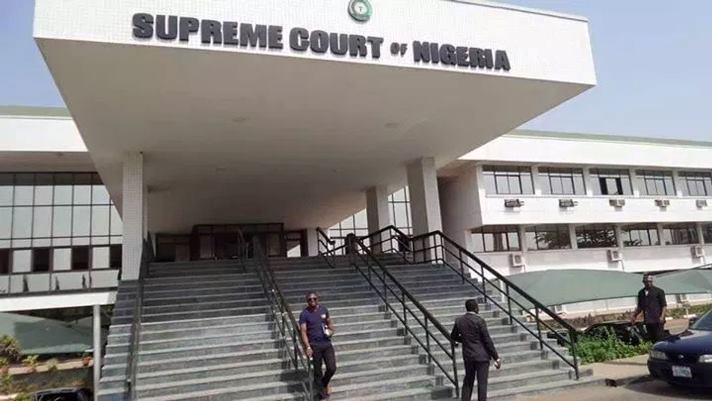
The Supreme Court on Monday affirmed the constitutional authority of the President to declare a state of emergency in any part of the country to avert a breakdown of law and order or prevent a slide into chaos.
In a split decision of six to one, the apex court held that the President is empowered under the 1999 Constitution to proclaim a state of emergency and, in appropriate circumstances, suspend elected state officials, provided such suspension is for a limited period.
Delivering the lead judgment, Justice Mohammed Idris ruled that Section 305 of the Constitution grants the President wide discretion to take extraordinary measures once a state of emergency has been declared.
According to him, the Constitution deliberately does not itemise the specific actions the President may take during an emergency, thereby allowing flexibility in responding to exceptional threats to public order and constitutional governance.
MILO Signs on Northern Influencers to Strengthen National Representation
“The clear intention of the Constitution is to empower the President to act decisively where normal governance structures are unable to cope with grave threats to peace, security and constitutional order,” Justice Idris held.
The judgment arose from a suit filed by states governed by the Peoples Democratic Party, challenging President Bola Tinubu’s declaration of a state of emergency in Rivers State, during which the governor, deputy governor and members of the House of Assembly were suspended for six months.
The plaintiffs, represented by the Attorneys General of Adamawa, Enugu, Osun, Oyo, Bauchi, Akwa Ibom, Plateau, Delta, Taraba, Zamfara and Bayelsa states, asked the court to determine whether the President could lawfully suspend democratically elected officials and replace them with an unelected sole administrator under the guise of emergency powers.
They also questioned whether the suspension of a state House of Assembly was consistent with the Constitution, citing several provisions, including Sections 1, 4, 5, 11, 176, 180, 188 and 305 of the Constitution.
The defendants in the suit were the Federal Government and the National Assembly.
In an earlier ruling, Justice Idris upheld the preliminary objections raised by the defendants, holding that the plaintiffs failed to establish a dispute capable of invoking the Supreme Court’s original jurisdiction.
He ruled that the states did not demonstrate any actionable conflict between themselves and the Federation as required by law.
On that basis, the court struck out the suit for want of jurisdiction. However, the justice proceeded to consider the substantive issues raised and dismissed the case on its merits.
The majority of the justices agreed that the President acted within his constitutional powers in declaring a state of emergency and taking measures aimed at restoring order, including the temporary suspension of elected officials.
However, Justice Obande Ogbuinya dissented.
Economic Sabotage: Why Dangote Wants Farouk Ahmed Investigated
While agreeing that the President has the constitutional authority to declare a state of emergency, he held that such power does not extend to suspending elected governors, deputy governors or members of state legislatures.
According to the dissenting opinion, the suspension of elected officials amounts to an unconstitutional interference with democratic mandates.
Despite the dissent, the majority decision effectively validates the President’s actions in Rivers State and clarifies the scope of executive authority during emergencies, reinforcing the President’s discretion to take extraordinary but time-bound measures to stabilise troubled states.