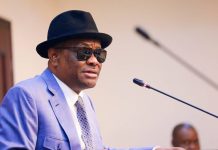

On 9 December 2025, two prominent governors — Fubara of Rivers State and Adeleke of Osun State — publicly severed ties with the PDP. Fubara joined All Progressives Congress (APC) while Adeleke moved to Accord Party, in a political earthquake that further weakens PDP’s already fragile structure.
The moves come after months of simmering tensions, internal crises, and failed loyalty — a double blow that “shatters the embattled PDP” and dims its 2027 election hopes.
Why Fubara Left: Protection, Stability, and Gratitude to Tinubu
PDP Failed to Protect Him:
Fubara told stakeholders in Port Harcourt that the PDP did not protect him during a deep political crisis in Rivers State. He said that without the intervention and backing of President Bola Ahmed Tinubu, he might have already been “a former governor.”
Need for Stability and Governance:
According to statements at the defection event, Fubara argued that internal party strife within PDP had hindered effective governance. He claimed that aligning with APC would provide a more stable political environment, enabling his administration to deliver on its mandate.
Malami in the Net: Ex-AGF Detained Over Terrorism Financing, Abacha loot, Others
Reciprocity to Tinubu:
Fubara framed his defection partly as a gesture of loyalty and thanks to President Tinubu, suggesting that his survival in office was tied to Tinubu’s support. He pledged full identification with the President’s leadership rather than a mere “backyard support.”
Why Adeleke Quit: Crisis, Clarity, and Focus on Welfare
National Leadership Crisis in PDP:
Adeleke pointed to unresolved power struggles at the national level of PDP as the main reason for his resignation. He submitted his resignation letter on 4 November 2025, but only made it public in December.
Need for Re-Election Clarity:
With the 2026 Osun governorship election around the corner, Adeleke said the internal turmoil within PDP made it impossible to guarantee the party’s backing for his re‑election bid. Joining Accord Party was, in his words, a strategic move for political clarity and continuity.
Alignment with Welfare-Oriented Ideology:
Adeleke described Accord Party’s welfarist philosophy as more in tune with his administration’s commitment to citizens’ welfare. He argued that the decision will help preserve and advance development efforts already underway in Osun State.
What Went Down — Why Benin’s Coup Fizzled Out Before It Began
What It Means for Nigeria’s Political Landscape
-
PDP’s South‑South & South‑West Strongholds Weakened: With Fubara and Adeleke gone — plus other recent defections — PDP’s hold over key states in the South is eroding dangerously. Analysts warn this could reshape regional dynamics going into the 2027 general elections.
-
APC’s Dominance Grows: Fubara’s move to APC strengthens the ruling party’s grip in the South‑South, and signals a growing trend of regional consolidation under Tinubu’s leadership.
-
Accord Party’s Rising Profile: Adeleke’s jump to Accord brings national attention to a smaller party — potentially re‑shaping opposition politics and offering new platforms for ambitious politicians disillusioned with PDP’s internal drama.
-
Signal of “Privatised Politics” Over Ideology: The defections suggest that personal political survival — not party ideology — may now drive affiliations. Loyalty and protection, as Fubara admitted, seem to trump long‑standing political alignments.