
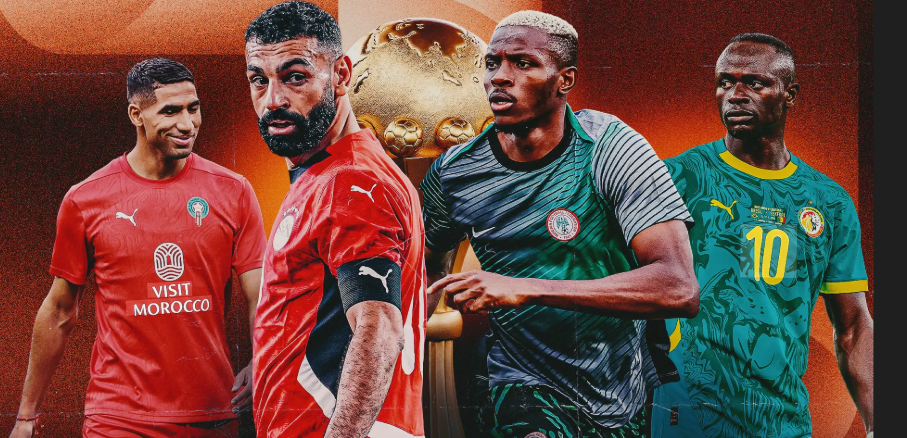
When the Africa Cup of Nations kicks off on the night of December 21, it will not just be a celebration of continental pride and footballing heritage. It will also be a showcase of extraordinary wealth, career arcs shaped by Europe’s elite leagues and Saudi Arabia’s financial muscle, and a reminder of how far African football has travelled since the turn of the century.
AFCON 2025 arrives with a striking subplot: the tournament will feature some of the highest paid footballers on the planet, men whose weekly wages now rival the annual budgets of entire clubs back home. From Riyad Mahrez’s staggering near one million pounds a week to Mohamed Salah’s enduring reign as Egypt’s global icon, the competition doubles as a roll call of Africa’s financial elite.
Yet behind the figures lie deeper questions. How did African footballers become such dominant earners in the global game? What does their absence mean for clubs mid season? And how much do these fortunes matter once national colours are pulled on?
A generation shaped by Europe and paid by the Gulf
For decades, African players fought stereotypes and structural barriers to be taken seriously at the top level. Today, that struggle has given way to dominance. The likes of Salah, Sadio Mane, Mahrez and Victor Osimhen are not just squad players at elite clubs. They are franchise stars.
Dangote Refinery Begins Nationwide PMS Sales at N739 per Litre at MRS Stations
Europe laid the foundation. Salah’s rise from Basel to Chelsea, Roma and then Liverpool turned him into a global brand. Mahrez’s journey from Le Havre to Leicester City’s miracle title and Pep Guardiola’s Manchester City dynasty rewrote expectations of African wide players. Osimhen’s explosion at Napoli confirmed that African strikers could be the face of title winning sides.
Then came Saudi Arabia.
The Saudi Pro League’s aggressive recruitment drive has transformed the earnings landscape. Goalkeepers like Yassine Bounou and Edouard Mendy, defenders like Kalidou Koulibaly and midfield enforcers such as Franck Kessie now earn sums that European clubs would struggle to justify under financial rules.
By the time AFCON 2025 begins, eight of the ten highest paid players at the tournament will be based in Saudi Arabia.
The wages, the weight and the expectations
Riyad Mahrez tops the list at £827,448 a week, a figure that once seemed unimaginable for an African footballer. At 34, he arrives at AFCON not as a developing talent, but as a man whose career has already ticked almost every box. League titles. Champions League. Individual awards. The pressure now is legacy.
Just behind him is Sadio Mane, earning £634,060 a week at Al Nassr. Mane’s story stands apart. Wealth has not diluted his image at home. In Senegal, he remains the embodiment of humility, a player whose success funds hospitals, schools and livelihoods. AFCON is where that bond is renewed.
Kalidou Koulibaly, on more than half a million pounds weekly, represents another theme. Experience. At 34, his value is not flair but authority. In tournaments like AFCON, that matters.
Supreme Court Affirms President’s Power to Declare State of Emergency, Suspends Govs, others
Mohamed Salah’s £400,000 a week still feels modest by comparison, yet his influence dwarfs the numbers. In Egypt, Salah is not just a footballer. He is political symbolism, social inspiration and sporting inevitability. Every AFCON he plays carries the same question: will this finally be the one where individual greatness becomes continental glory?
Club disruption, country devotion
AFCON has always tested club loyalties, but never quite like this. Premier League sides lose stars for weeks. Coaches reshuffle systems. Fans complain, then watch anyway.
Yet for the players, the calculation is different. Whether you earn £150,000 or £800,000 a week, AFCON remains personal. It is where careers are judged beyond club medals. Where narratives harden. Where heroes are crowned.
For Victor Osimhen, now permanently at Galatasaray and earning over £318,000 weekly, AFCON is a chance to complete his status as Nigeria’s attacking spearhead. For Omar Marmoush, newly minted at Manchester City, it is about announcing himself as Egypt’s next great forward alongside Salah.
Even those absent shape the story. Ghana’s failure to qualify means Antoine Semenyo stays with his club, a reminder that wealth does not guarantee national success.
What AFCON still represents
Strip away the wages, and AFCON remains stubbornly emotional. It is played in heat, noise and tension that no European night quite replicates. Form often collapses. Reputation can vanish. Unknown names become immortal.
That is the paradox of AFCON 2025. It will feature Africa’s richest ever collection of players, yet money counts for little once the ball rolls.
In the end, whether you earn £158,000 like Yassine Bounou or £827,000 like Riyad Mahrez, AFCON asks the same question it always has.
When Africa calls, who truly delivers?