
Lagos State could be sitting on a trillion naira annual windfall from property tax if it fixes one thing first data.
That was the core message from Taiwo Oyedele, Chairman of the Presidential Fiscal Policy and Tax Reforms Committee, as he delivered the keynote address at the Tax Reform Summit 2026 in Lagos. His argument was blunt and provocative. Property tax remains one of Nigeria’s most underused but most reliable revenue streams and Lagos has everything it needs to make it work at scale.
Intelligence vs Diplomacy: Why U.S. Spy Reports Still See Putin Pushing Beyond Ukraine
Oyedele said that with just two million taxable properties in Lagos valued at an average of N100 million and taxed at a modest 0.5 percent, the state could generate N1 trillion every year. Not through higher rates, but through better structure, credible data and predictable enforcement.
Property taxation, he argued, is difficult to evade, grows naturally with urban development and directly links public services to rising property values. When roads, water and infrastructure improve, property values rise, living standards improve and tax revenue grows in a self reinforcing cycle.
But that cycle, Oyedele warned, only works if the basics are right. Proper property enumeration, accurate valuation, transparency and consistency must move together. Without them, property tax remains a theoretical promise rather than a practical revenue engine.
At the heart of his proposal is data. Not just a register of taxpayers, but a credible database that captures who owns what, where, how much it is worth and who is earning income. Oyedele noted that Nigeria currently has fewer than ten million active individual taxpayers nationwide, a number he believes Lagos alone should be able to match.
For him, the challenge before Lagos is not ambition but execution. He urged the state to demonstrate leadership in data quality for fiscal planning, from property registers to taxpayer databases and fiscalisation systems. Reform, he stressed, cannot succeed on instinct or discretion. It must be driven by evidence.
Oyedele also pushed for stronger collaboration at the subnational level, noting that the Presidential Fiscal Policy and Tax Reform Committee, working with the Joint Revenue Board, has drafted a model tax harmonisation law for states. Ekiti, Zamfara, Anambra and Kano have already passed the law. Lagos, he said pointedly, should be next.
He criticised fragmented revenue collection across agencies, arguing that tax collection should be harmonised under the Lagos State Internal Revenue Service to reduce inefficiency and leakage. According to him, reform works best when states and local governments collaborate and rely on technology for transparency.
Tax reform, Oyedele concluded, is not an event but a process that requires courage, consistency and sustained work. Nigeria’s fiscal future, he said, will be decided not only in Abuja but in states and local governments willing to build fair, predictable and data driven tax systems.
Why the PDP Is Bleeding in Rivers and How the APC Is Cashing In
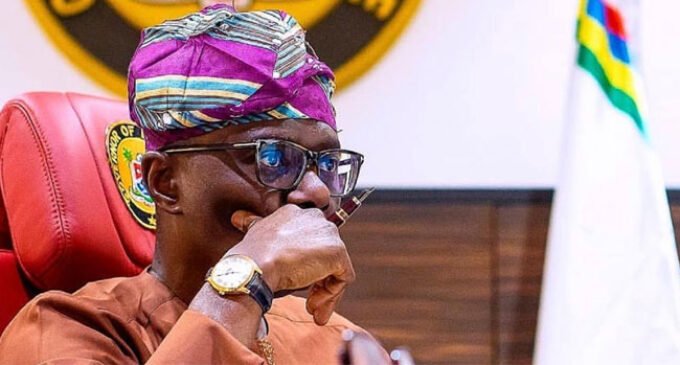
Lagos State Governor Babajide Sanwo Olu, in his opening remarks, echoed that position. He said the success of Nigeria’s tax reform agenda would depend largely on implementation at the state level, with Lagos positioning itself as a leading subnational driver of the reforms.
According to the governor, Lagos is moving beyond policy conversations to practical execution, treating tax reform as a governance reform anchored on simplicity, transparency, digital efficiency and fairness. He described taxation as a social contract, one that only works when citizens trust that revenues are reinvested responsibly.
Sanwo Olu said Lagos continues to channel tax revenues into transport infrastructure, healthcare, education, security and social protection in line with the state’s THEMES Plus development agenda. As national reforms push consumption based taxation and stronger data integration, he said Lagos is strengthening its systems to make compliance easier and the business environment more predictable.
The message from both speakers was clear. The money is already in Lagos. The question is no longer whether the state can raise more revenue, but whether it is ready to organise its data, institutions and political will to unlock it.


