…Adewole Adebayo faults President’s biblical analogy, says Nigerians need affordable fuel, functional refineries, not promises of future prosperity
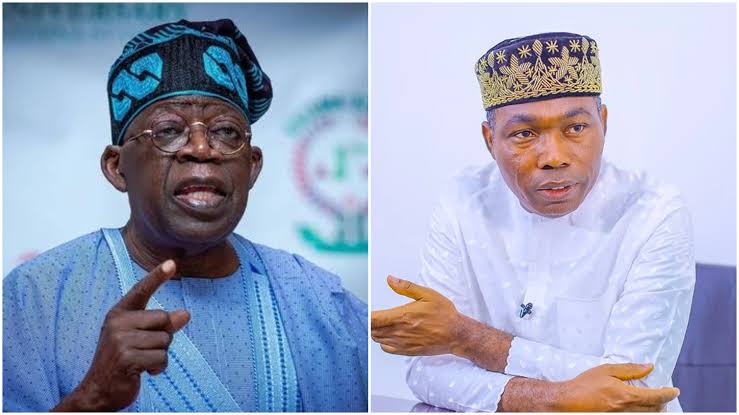
The presidential candidate of the Social Democratic Party (SDP), Prince Adewole Adebayo, has described President Bola Tinubu as the biblical Pharaoh rather than Moses, accusing his administration of pursuing economic policies that have impoverished Nigerians while promising them prosperity in the future.
Adebayo said Tinubu’s comparison of fuel subsidy removal to the biblical journey of the Israelites from Egypt was misplaced, arguing that a leader who claims to be taking his people to the Promised Land must first guarantee their survival throughout the journey.
The SDP candidate was reacting to Tinubu’s recent declaration that Nigeria would never return to Egypt, a biblical reference the President used to defend his administration’s decision to remove petrol subsidy.
Tinubu Not Plotting to Kill Atiku, APC Denies Assassination Allegation
‘Laide, Please Don’t Be Angry’ — Eniola Badmus Begs Bakare After Viral Interview
Tinubu had maintained that the removal of subsidy was necessary to rescue Nigeria from economic collapse, insisting that he had no regrets about the decision despite the hardship associated with the policy.
However, Adebayo, speaking during an interview, rejected the analogy, saying the President’s policies bore greater resemblance to the conduct of Pharaoh, who oppressed the Israelites, than to Moses, who led them out of captivity.
“And if you want to go biblical or Quranic now, President Tinubu himself is the Pharaoh. He is not Moses, because if you want to be a Moses, you have to have manna for the people. You have to have kindness for the people,” Adebayo declared.
He argued that Moses did not abandon the Israelites to hunger and suffering while promising them a better future, but ensured that their immediate needs were met throughout their journey.
Afenifere Leader, Pa Reuben Fasoranti, Dies at 100
Ebola Scare in Abuja: FG Traces 44 Contacts After Infected Traveller Spends Days in Hospital
“When Moses was taking the Israelites out of Egypt, he ensured that they came through the desert and provided manna for them. He did not tell them, ‘Well, you can die in the desert. Those of you who get to the Promised Land will enjoy the benefits later.’
“He made sure they had their daily manna and took care of them very well,” he said.
Adebayo maintained that the Tinubu administration had failed to demonstrate the compassion and concern for ordinary citizens that should accompany difficult economic reforms.
According to him, the government’s approach had placed the burden of adjustment on Nigerians without providing adequate protection against the resulting hardship.
“You will see that the policies of the President are more akin to those of Pharaoh, where you take care of yourself and neglect the needs of the people and don’t allow them to express their God-given qualities,” he stated.
The SDP presidential candidate also rejected the suggestion that Nigerians seeking affordable petrol were advocating a return to the economic conditions that existed before subsidy removal.
He argued that the fundamental problem was neither subsidy retention nor subsidy removal, but the failure of successive governments to guarantee sufficient domestic refining capacity and control the supply of petroleum products.
According to Adebayo, debating subsidy without addressing local production would leave Nigerians exposed to high fuel prices, fiscal pressures and inefficiencies in the petroleum sector.
“The argument around subsidy is not a solution. Whichever way you go, both sides are going to lose,” he said.
“If you say I’m going to keep subsidy, what is going to happen to you is that you are trying to subsidise a product you don’t produce. And in between, you have a lot of fiscal problems to deal with and corruption.
“On the other hand, you say I’m going to remove subsidy and you don’t have a product. You are surcharging Nigerian people, but the command and control of supply is not in your hand.”
Adebayo insisted that his proposed alternative would prioritise the restoration of Nigeria’s publicly owned refineries and the allocation of crude oil for domestic processing.
He said the country’s existing government refineries had a combined installed capacity of 445,000 barrels per day, which, if properly utilised, could contribute substantially to meeting domestic petroleum demand.
According to him, even after accounting for ageing infrastructure and operational limitations, the facilities should be capable of processing about 300,000 barrels daily.
“And now that private refineries are coming up, we can make up for the gap,” he added.
The SDP candidate accused successive authorities of mismanaging crude oil allocations intended for domestic refining and abandoning facilities that he believed could still be made operational.
“The problem is that they have misallocated the domestic crude. They’ve sold it, thrown it away, and they’ve decided to shut the refineries down, lie against the refineries that they can’t work, whereas they can work,” he alleged.
Adebayo said his administration would seek to restore the domestic crude allocation of 445,000 barrels per day and investigate losses arising from oil theft and weaknesses in the petroleum supply chain.
“What we are going to do differently is to ensure that we get the refineries to work. We reinstate the 445,000 barrels, even though they claim now that they don’t have more than 100,000 barrels left,” he said.
He also demanded accountability for crude oil losses in the Niger Delta and other oil-producing areas, questioning why Nigeria continued to experience shortages and high petroleum costs despite its resource endowment.
The SDP candidate maintained that Nigerians deserved an economic policy that would guarantee access to essential products at affordable prices rather than one that required them to endure prolonged hardship in anticipation of future benefits.
He insisted that Tinubu’s biblical analogy failed to address the central questions about domestic production, fuel affordability and the welfare of citizens.
“The idea of going back to Egypt is not relevant to us. I don’t think President Tinubu is addressing us in that regard because he has no answer to our own,” Adebayo said.
He argued that the real test of economic leadership was not the ability to defend difficult decisions with religious metaphors but the capacity to protect citizens while implementing reforms.
Adebayo’s remarks come amid renewed political debate over petrol subsidy, domestic refining and the rising cost of living ahead of the 2027 presidential election.