
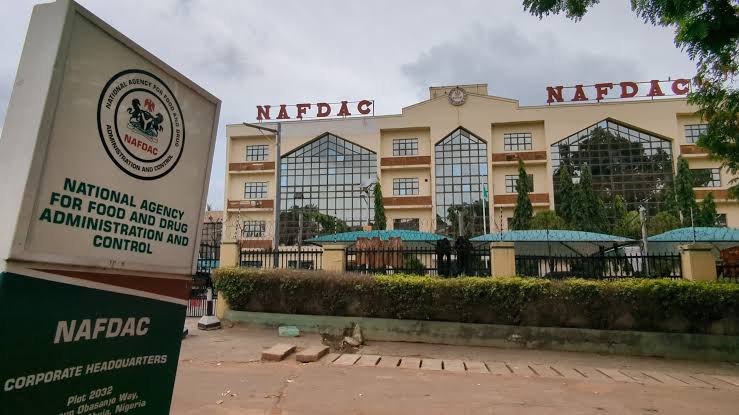
The National Agency for Food and Drug Administration and Control has raised a fresh alarm over the spread of counterfeit and substandard products, revealing that some alleged Chinese counterfeiters have moved operations into Nigeria and established local production and distribution networks.
NAFDAC Director of Investigation and Enforcement, Martins Iluyomade, said recent investigations showed that individuals previously operating from outside Nigeria were now establishing plants and logistics channels within the country.
According to him, the development represents a new dimension in Nigeria’s counterfeit goods crisis because operators no longer need to manufacture products abroad and smuggle them into the country.
“Before, to fake a product, you needed to go to China to bring it. Now, you don’t need to go. They are here with us,” Iluyomade told The PUNCH in Lagos.
2027: Kwankwaso Declares ‘Nigeria Will Be OK’ with Obi As President
How to Buy Dangote Refinery Shares: What ₦5,250, ₦52,500 and ₦525,000 Can Get You
He said investigations had also uncovered logistics companies allegedly owned by some of the suspected counterfeiters and used to move fake products into the Nigerian market.
NAFDAC, he said, had been shutting down some of the companies as part of its enforcement operations.
The revelation comes amid growing public concern over fake toothpaste, cosmetics, beverages, bottled water, medicines and other consumer products circulating in Nigerian markets.
The agency has particularly received complaints about counterfeit versions of popular toothpaste brands including Oral B and Colgate, with investigations and seizures carried out in Kano, Sokoto, Delta and Onitsha.
Iluyomade said NAFDAC had arrested suspects in connection with the counterfeit toothpaste trade and was prosecuting two people in court for allegedly importing fake toothpaste brands.
The latest revelation comes as NAFDAC intensifies one of its most aggressive enforcement campaigns against counterfeit, falsified, substandard and unregistered products.
The agency said it destroyed or seized regulated products worth more than ₦1.54 trillion across the country, while securing 64 convictions for counterfeiting between June 2025 and June 2026.
The convictions, according to NAFDAC, represent the highest number recorded in the agency’s history, with offenders receiving prison sentences ranging from one to seven years without the option of a fine.
NAFDAC Director General, Professor Mojisola Adeyeye, said the agency had intensified surveillance and enforcement operations across the country.
More than 47,830 facilities are currently under surveillance, while enforcement operations between May and July 2026 led to the removal of more than 7,000 brands and products from circulation, according to the agency.
One of the largest coordinated operations involved raids in major commercial centres in Lagos and the South East, where NAFDAC seized and destroyed more than 137 truckloads of counterfeit and substandard products.
The value of the products destroyed in the February and March 2025 operation alone was put at more than ₦1.5 trillion.
2027: Kwankwaso Declares ‘Nigeria Will Be OK’ with Obi As President
NAFDAC has also stepped up enforcement against counterfeit pharmaceuticals. In February 2026, the agency destroyed pharmaceutical products worth more than ₦15 billion in Ibadan, while another operation in Kuje, Abuja, in March led to the destruction of about ₦1.8 billion worth of counterfeit medicines and other prohibited products.
The agency’s enforcement campaign has gained renewed attention following concerns from manufacturers, health professionals and economists that counterfeit goods are not only putting consumers at risk but also undermining legitimate businesses and government revenue.
Iluyomade said the agency would continue to pursue manufacturers, importers, distributors and other participants in the counterfeit supply chain.
The latest disclosure, however, suggests that the counterfeit trade is becoming increasingly sophisticated, with some operators allegedly moving from simply importing fake products to establishing production and logistics infrastructure within Nigeria.
NAFDAC said it would continue to shut down illegal facilities, seize offending products and prosecute those responsible for putting unsafe and unregistered goods into the Nigerian market.