The Federal Government has described the Dangote Petroleum Refinery and Petrochemicals as a critical pillar of Nigeria’s ambition to build a $1 trillion economy, pledging stronger collaboration with the private sector to accelerate industrialisation, job creation and economic transformation.
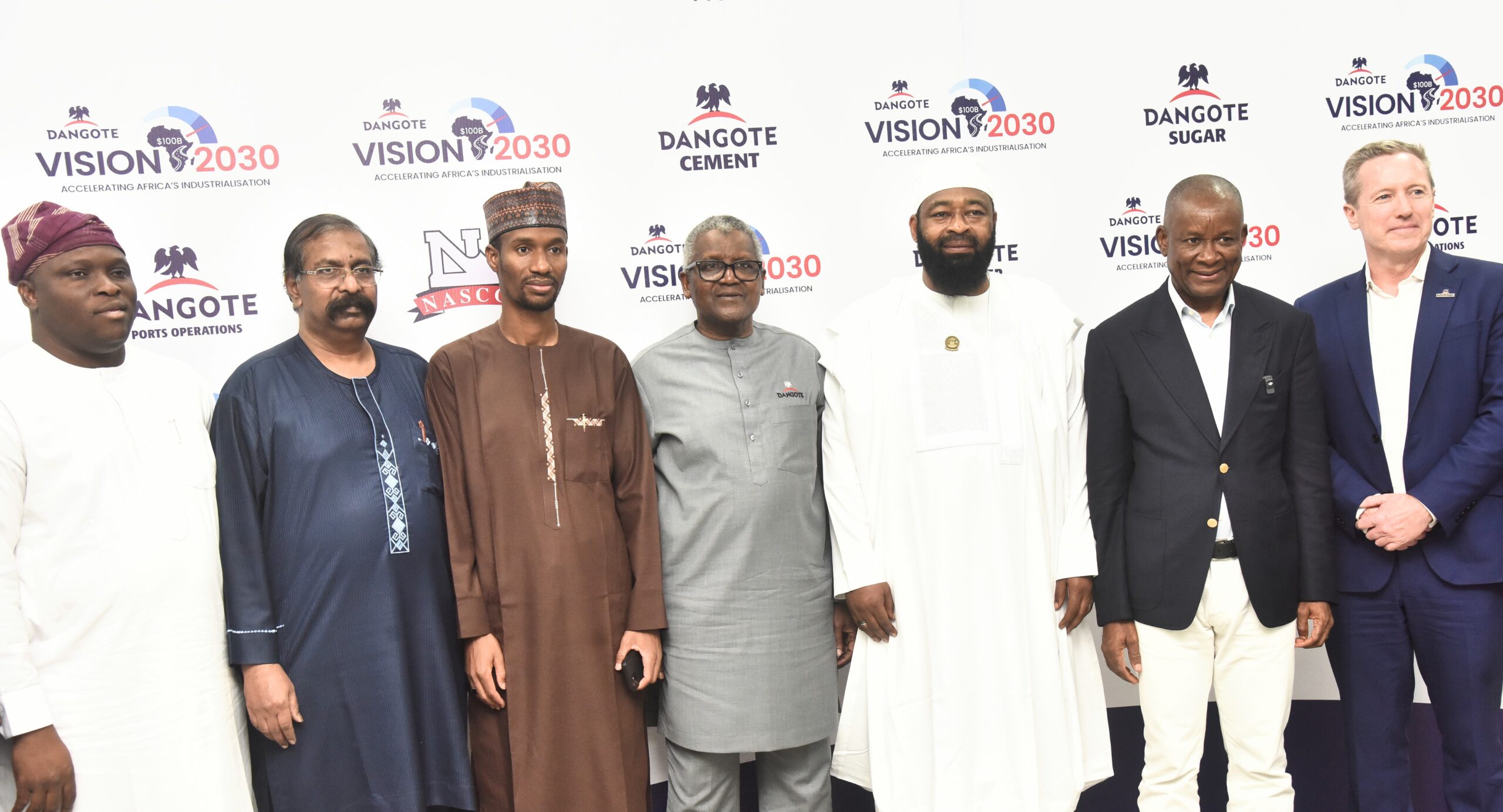
Minister of State for Industry, Senator John Owan Enoh, made the declaration on Wednesday after leading a high level delegation from the Ministry of Industry on an extensive tour of the 700,000 barrels per day Dangote Petroleum Refinery, Dangote Petrochemicals complex and Dangote Fertiliser Limited in Lagos.
Describing the integrated industrial complex as one of Africa’s most significant investments, Enoh said the facilities exemplify the type of large scale industrial development needed to achieve President Bola Tinubu’s economic vision.
7 Mistakes Costing Thousands of Nigerians Federal Government Jobs
Makinde Receives Two Security Aircraft to Combat Kidnapping, Banditry in Oyo
“You cannot be Minister in charge of Industry and not visit the Dangote Refinery,” Enoh said. “This facility matters because of what it represents for Nigerian industry, for our people and for the realisation of President Bola Tinubu’s vision of a one trillion dollar economy.”
The minister said the refinery has become a powerful symbol of value addition, industrial competitiveness and Nigeria’s growing manufacturing capacity.
“The more a country adds value to its products, the more respect it earns globally. The Dangote Refinery stands today as one of the strongest demonstrations of that principle,” he added.
Enoh noted that the refinery has transformed Nigeria from a major importer of refined petroleum products into an exporter serving international markets.
“When global supply disruptions occurred, Nigeria was able to export petroleum products to markets in the Middle East and beyond. That is an extraordinary achievement and one that deserves recognition,” he said.
The minister, accompanied by directors, regulators and heads of agencies under the ministry, said the visit gave officials a deeper appreciation of the refinery’s scale, technological sophistication and strategic importance.
“I brought members of my team here because I wanted them to see firsthand what this investment represents. It has been a humbling and enlightening experience,” he said.
Enoh also dismissed concerns over the refinery’s single train configuration, noting that operations continued seamlessly during scheduled maintenance.
He pledged continued government engagement with Dangote Industries through the Industrial Revolution Work Group and ministerial roundtables to address challenges facing manufacturers, particularly access to affordable long term financing.
The minister further commended Aliko Dangote for supporting the launch of the Nigeria Industrial Policy, which targets increasing manufacturing’s contribution to Gross Domestic Product from current levels to 20 per cent by 2030 and 25 per cent by 2035.
“We want to be judged by the extent to which we implement this policy. Achieving these targets will require a strong partnership between government and industry leaders like Aliko Dangote,” he said.
Speaking during the visit, President and Chief Executive of Dangote Industries Limited, Aliko Dangote, said industrialisation remains the fastest route to creating jobs, reducing poverty and achieving lasting prosperity.
“There is no way to create jobs and prosperity without industrialisation,” Dangote said. “The greatest attraction for foreign investors is the success of domestic investors. When local investors thrive, they send a powerful signal that the environment is conducive for investment.”
Dangote revealed that Dangote Industries recently raised an unsecured and unrated bond below Nigeria’s sovereign benchmark, describing it as evidence of growing investor confidence in credible Nigerian private sector institutions.
According to him, the successful fundraising demonstrated that Nigerian companies can mobilise long term capital when supported by stable and predictable government policies.
He also praised Senator Enoh’s commitment to industrial development, describing him as one of the most dedicated industry ministers Nigeria has had.
Reflecting on the refinery project, Dangote described it as the biggest business risk of his life, recalling that many financiers doubted the project would ever be completed.
Despite challenges ranging from the COVID-19 pandemic and foreign exchange volatility to widespread scepticism from lenders, he said the successful completion of the refinery proves Nigerian entrepreneurs can execute projects of global significance.
“What we have achieved here has never been done before on this scale. Once one person succeeds, many others will be encouraged to follow,” he said.
SERAP Sues NNPCL Over Alleged Failure to Account for ₦211tn in Oil Funds
How four policemen Forced ICPC Chairman to Withdraw N53,000 at PoS
Dangote disclosed that the refinery, when operating at full capacity, will account for the equivalent of about 10 per cent of the United States’ refining capacity and process approximately 2.5 per cent of globally traded crude oil.
He urged the Federal Government to continue supporting indigenous investors, describing them as the country’s strongest drivers of employment, foreign exchange earnings and long term economic resilience.
“If Nigeria is to achieve sustainable growth and become a one trillion dollar economy, industrialisation must be the foundation. Indigenous investors remain the strongest catalysts for that transformation,” Dangote said.