
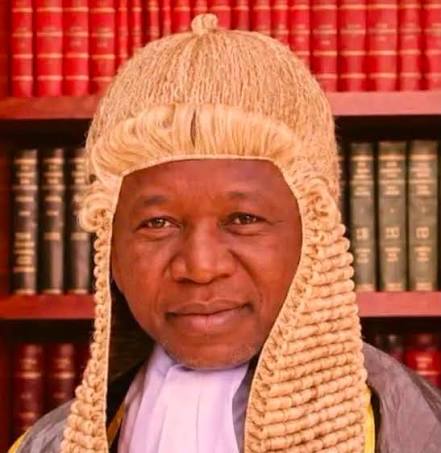
Justice Faruk Hassan Bunza of the Kebbi State High Court has revealed how he spent nine days in a bandits’ hideout after being abducted from his residence, saying his captors monitored news reports and relied on informants within the community to gather information about their targets.
The judge, who regained his freedom on August 3 after a reported N50 million ransom was paid, gave a detailed account of his ordeal in an interview with Weekend Trust at his residence in Unguwar Chaki quarters, Bunza.
Justice Bunza said he was taken to Dutsen Bandan, a hill behind the National Youth Service Corps permanent orientation camp in Dakin Gari, Suru Local Government Area of Kebbi State, about 49 kilometres from his hometown.
He said the five armed men who abducted him from his residence in the early hours of July 26 forced him to trek about 25 kilometres barefoot before covering another 24 kilometres on motorcycles to their camp.
Mourinho Reveals Untold Story of How He Rejected Man Utd After Ferguson
US Tightens Visa Rules, Orders Nigerians to Deposit Up to $20,000
According to him, the abductors appeared to have monitored his movements for some time and had access to information about his personal life.
“I suspect my abductors had been monitoring me for a long time. They have informants who gave them details about me,” he said.
The judge said the bandits also demonstrated that they closely followed developments in the media.
He recalled that shortly after arriving at their camp, the kidnappers showed him photographs of himself and the chairman of Bugudu Local Government Area of Zamfara State, Nura Umar Abdullahi.
“They asked if it was me and said they were ordered to kidnap both of us, but they didn’t mention who gave the order,” he said.
The kidnappers also showed him a newspaper report about his abduction and claimed they had heard that President Bola Tinubu had directed that N200 million be paid for his release, although someone had stopped the payment.
“That shows they monitor news and social media,” Justice Bunza said.
The judge said there were fewer than 20 bandits at the camp, describing the group as a relatively small but organised network that depended heavily on informants.
According to him, younger members of the group served as informants and errand boys, while older members acted as armed foot soldiers.
“Most of these informants are young children of bandits. From my observation, roles among the bandits depend on age. While the younger ones serve as informants and errand boys, the adults are the foot soldiers,” he said.
Despite being armed, Justice Bunza said the kidnappers appeared constantly afraid of being detected by security agencies.
“They were very scared and on high alert,” he said, adding that the bandits once warned him to stop coughing because they feared he might be attempting to alert security operatives to their location.
The judge said he was not physically tortured or humiliated during his nine days in captivity.
“They were friendly throughout the nine days. They never humiliated me,” he said.
He said he was fed twice a day with tuwo shinkafa or semo and okra soup, alongside bottled water and Maltina.
However, he said two other Fulani men held at the camp were not treated similarly and were allegedly denied food and given dirty water from a stream.
Justice Bunza said he believed his position as a judge and the perception that he was wealthy were the main reasons for his abduction.
“As a judge I handle high-profile criminal cases including banditry and kidnapping. For that reason alone, the bandits might have targeted me,” he said.
He added that the kidnappers had been told that he was one of the wealthiest people in Bunza, with several cars, houses and farmlands.
“Based on my interaction with them, I fully understood that my abduction was purely for ransom. My abductors were just money mongers. They had no intention to kill me. Their target was to collect money,” he said.
The kidnappers initially demanded N200 million from his family before the amount was reportedly negotiated down to N50 million.
Justice Bunza said his eventual escape followed the payment of the ransom on August 3.
According to him, the two other captives escaped on August 1, while most of the bandits left the camp after the ransom was paid, leaving two men behind to guard him.
He said he later overheard the two men arguing, with one suggesting that he should be killed.
“They eventually abandoned me and ran away,” he said.
Around 5pm or 6pm, the judge said he removed the covering from his face and descended the hill.
He trekked to a nearby village but hid overnight because he feared the settlement could also be occupied by bandits.
The following morning, he continued his journey until he reached Kwanar Bandan, where he secured transportation towards Bunza.
He eventually arrived home in a tinted Toyota Corolla carrying three passengers.
“Because of the tinted glass, no one recognised me until I came out from the car. Then people started jubilating and sympathisers continued to troop to my house,” he recalled.
Justice Bunza, however, said the experience had not weakened his commitment to his judicial responsibilities.
“Nothing on this earth can change my attitude and commitment to my duties as a judge,” he said.
“In fact, this experience will only motivate me to double my commitment to discharging my duties.”
Five Arrested as FCT Police Recover Stolen Street Lights, Cables and Drainage Covers
Army Hunts Soldier Accused of Selling Military Uniforms to Terrorists
The judge also called for improved security for judicial officers, particularly at their residences, arguing that judges handling banditry and kidnapping cases are increasingly vulnerable to attacks.
He recalled that he had permanent security protection while serving as a magistrate and chief magistrate but no longer enjoyed the same level of protection.
“We are prone to attack. It is unfortunate and the government must do something urgently,” he said.
He urged the government to provide secure residential quarters for judges and ensure that judicial officers have security protection, particularly at night.
Justice Bunza also offered his assessment of the wider banditry crisis, arguing that security operations alone would not be sufficient to end the problem.
He identified poverty, unemployment and illiteracy as major drivers of banditry and kidnapping and called for greater investment in both Islamic and Western education.
“If government tackles the problems of poverty, unemployment and education, the menace of banditry and kidnapping will be drastically reduced, if not completely wiped out,” he said.
The judge attributed his survival and release largely to divine intervention and the prayers of his family, friends and well-wishers.
“Here I am today a free man. I’m hale and hearty; nothing worries me,” he said.